What is Mid-Century Modern Furniture? A Style Guide
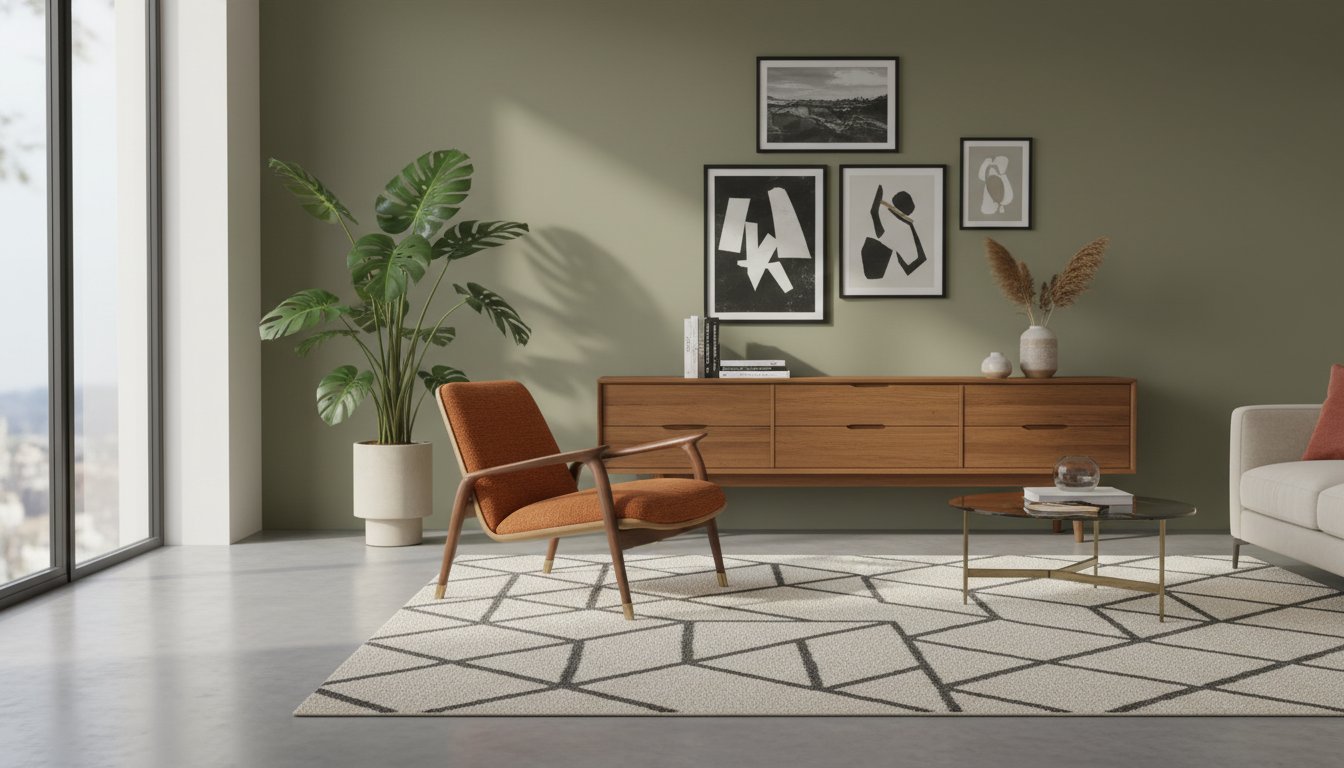
Ever wondered what makes a piece of furniture "Mid-Century Modern"? This iconic style is more than just a trend; it's a design movement celebrated for its timeless appeal and functionality. If you want to learn how to identify its key features, get to know the famous designers behind the look, and discover styling secrets to bring this classic aesthetic into your home, you've come to the right place. This guide will give you the confidence to spot, style, and shop for Mid-Century Modern furniture like a pro.
What Defines Mid-Century Modern Furniture?
At its heart, Mid-Century Modern (MCM) refers to a design movement that became popular from roughly the mid-1940s to the late 1960s. It grew out of the post-war era, when there was a desire for simplicity, functionality, and a connection to nature. The style rejects the ornate details of the past in favour of clean lines, simple forms, and a focus on how people actually live. It was all about creating beautiful, practical pieces that could celebrate both natural materials and exciting new technologies.
Key Characteristics to Look For
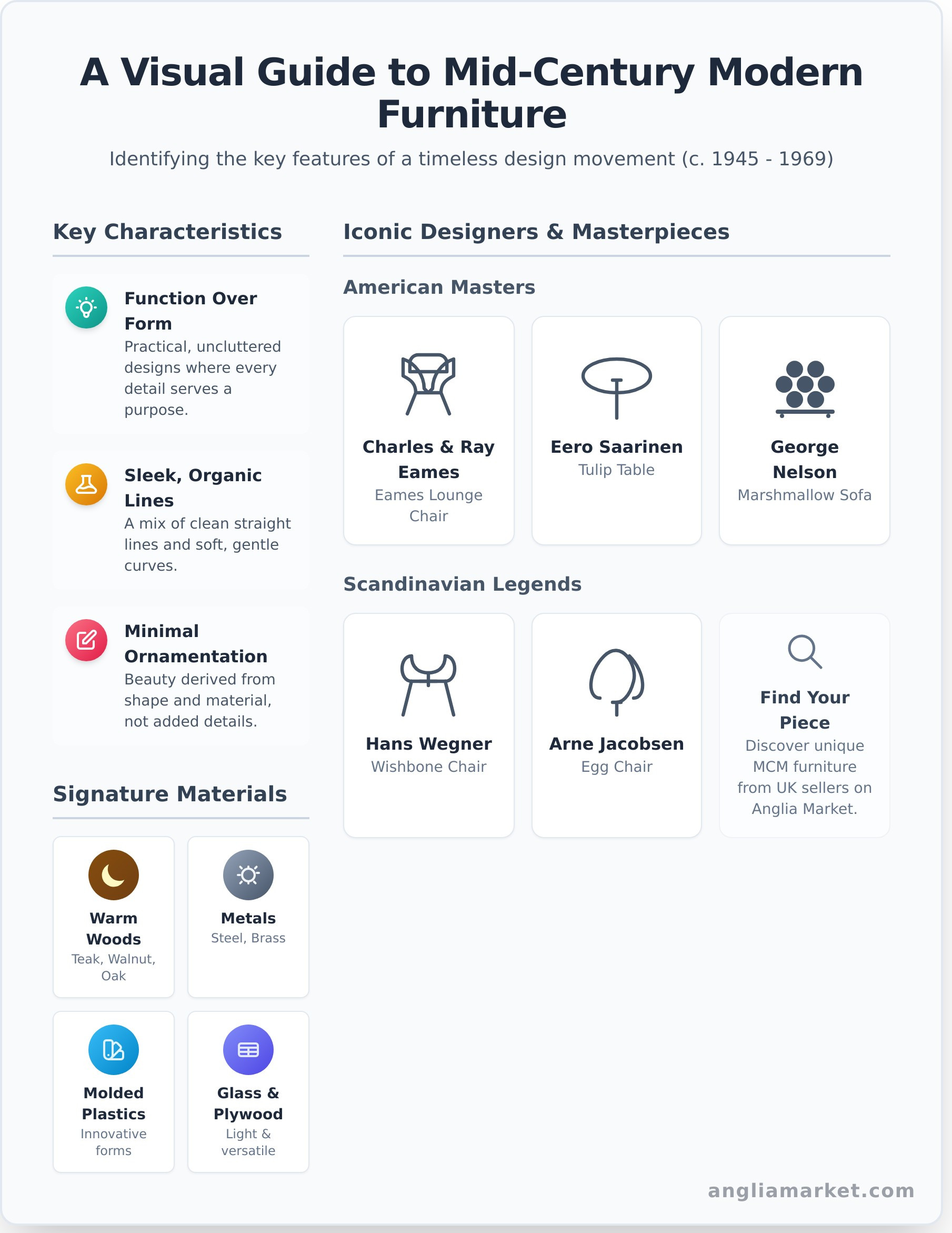
When you're trying to identify an MCM piece, look for these defining features:
- Function over form: Every detail has a purpose. The design is practical and uncluttered, avoiding unnecessary decoration.
- Sleek lines: You'll notice a mix of clean, straight lines and soft, organic curves. The silhouettes are often simple yet striking.
- Minimal ornamentation: The beauty of the piece comes from its shape and materials, not from carved details or elaborate patterns.
- Mixed materials: Designers weren't afraid to combine traditional and non-traditional materials in new and interesting ways.
Common Materials Used in MCM Design
The materials used are a huge part of the Mid-Century Modern identity. Designers celebrated the natural grain of wood while also embracing innovative man-made materials.
- Woods: Teak was the star, but walnut, oak, and rosewood were also incredibly popular for their warm tones and beautiful grain.
- Metals: You'll often see slender, tapered legs and accents made from steel, brass, or aluminum.
- Plastics: This era saw the rise of moulded plastics, famously used in iconic pieces like the Eames shell chair.
- Other materials: Glass, vinyl, and bent plywood were also used extensively to create lightweight and versatile furniture.
Iconic Designers and Must-Know Pieces
Recognising the masters behind the Mid-Century Modern movement is key to understanding its influence. The pieces they created were so revolutionary that they continue to inspire furniture design to this day. Here are a few of the names you should know.
American Masters: Eames, Saarinen, and Nelson
The United States was a hub of MCM innovation, with designers creating pieces that became instant classics.
- Charles and Ray Eames: This husband-and-wife duo are perhaps the most famous names in MCM design. Their legendary Eames Lounge Chair and Ottoman is the epitome of comfort and style.
- Eero Saarinen: Known for his sculptural forms, Saarinen designed the futuristic Tulip Table and the enveloping Womb Chair.
- George Nelson: As a design director, Nelson was a visionary. His playful Marshmallow Sofa and elegant Bubble Lamps are still highly sought after.
Scandinavian Legends: Wegner and Jacobsen
Scandinavian designers brought a unique focus on craftsmanship, natural materials, and minimalist aesthetics to the MCM movement.
- Hans Wegner: A master of chair design from Denmark, Wegner created over 500 chairs in his lifetime, including the iconic Wishbone Chair.
- Arne Jacobsen: Another Danish great, Jacobsen is famous for the sculptural Egg Chair and Swan Chair, which were designed for the SAS Royal Hotel in Copenhagen.
How to Style Mid-Century Modern Furniture in Your Home
Bringing this timeless style into your home is easier than you think. The key is to integrate pieces seamlessly without making your space look like a time capsule. You don't need to commit to a full-blown retro theme; even one or two well-chosen items can make a huge impact.
Start with a Statement Piece
The easiest way to introduce MCM into your decor is to choose one standout item. A beautiful teak sideboard in the dining room, a classic armchair in the living room, or a uniquely shaped coffee table can serve as a stunning focal point. From there, you can build the rest of the room's decor around it, creating a cohesive look without overwhelming the space.
Mixing with Other Styles
Mid-Century Modern furniture is surprisingly versatile. Its clean lines and simple forms pair wonderfully with other aesthetics, particularly minimalist, contemporary, and bohemian decor. Don't be afraid to mix wood tones or to place an MCM piece next to a modern sofa. You can use contemporary art, plush textiles, and plants to tie the different styles together into a look that feels personal and curated.
Find Your MCM Finds on Anglia Market
Looking for that perfect piece to complete your room? Instead of limiting yourself to big-box stores, you can discover unique Mid-Century Modern furniture from independent UK small businesses. On a marketplace, you can find everything from beautifully restored original vintage items to new pieces inspired by the classic designs. By shopping this way, you not only create a truly unique home but also support passionate, independent sellers. Ready to find your next treasure? Explore Mid-Century Modern furniture from UK sellers today.
Frequently Asked Questions
What's the difference between Mid-Century Modern and retro?
Mid-Century Modern refers to a specific design period (roughly 1945-1969) with a focus on clean lines, organic forms, and functionality. "Retro" is a more general term for styles imitating trends from the recent past, often associated with the brighter, bolder, and more kitsch designs of the 1960s and 70s.
How can I tell if a piece of furniture is authentic MCM?
Look for signs of quality craftsmanship, like dovetail joints in drawers. Check for markings or labels from well-known designers or manufacturers. The materials are also a clue: solid woods like teak and walnut, tapered legs, and simple hardware are all good indicators.
Is Mid-Century Modern furniture still in style in 2026?
Absolutely. The principles of MCM—simplicity, functionality, and quality materials—are timeless. Its clean aesthetic works well in modern homes, making it a style that continues to be highly popular and relevant.
Is IKEA furniture considered Mid-Century Modern?
While IKEA is known for its Scandinavian design principles, which share roots with MCM (like simplicity and functionality), it is not authentic Mid-Century Modern. However, many of IKEA's designs are heavily influenced by the MCM style.
How do I care for vintage wooden MCM furniture?
For woods like teak and walnut, regular dusting with a soft cloth is essential. Avoid placing pieces in direct sunlight, which can fade the wood. For cleaning, use a mild wood cleaner and polish with a teak oil or appropriate wax to nourish the wood and restore its lustre.
Now that you're equipped with the knowledge to identify and style Mid-Century Modern furniture, it's time to start the search for pieces that speak to you. By choosing to shop on a platform that champions small businesses, you'll discover one-of-a-kind items you simply won't find anywhere else. Every purchase supports an independent UK-based seller, allowing you to furnish your home with unique, character-rich pieces. Enjoy a secure and reliable shopping experience as you bring this timeless style into your life. Shop unique furniture from UK small businesses on Anglia Market.
No posts found
Write a review