How to Spot Quality Kitchenware on a Budget: The 2026 Savvy Buyer’s Guide

The most expensive frying pan in the shop window is rarely the one that will last a decade in your kitchen. It's frustrating to invest in a budget cookware set only to watch it warp or lose its coating within months. You shouldn't have to choose between overpriced high-street brands and low-quality imports. We understand the confusion surrounding technical terms like tri-ply or full tang. This guide teaches you how to spot quality kitchenware on a budget by mastering simple material checks and smart shopping strategies for 2026.
You'll learn how to identify professional-grade tools without paying for a designer logo. We'll show you what to look for in durable stainless steel and why independent UK sellers often offer the best value. This is your roadmap to a kitchen full of buy-it-for-life essentials on a modest budget.
Key Takeaways
- Identify professional-grade features like thermal efficiency and structural integrity that exist independently of high-street price tags.
- Master our practical 5-point checklist to learn how to spot quality kitchenware on a budget by inspecting base thickness and handle security.
- Connect with independent UK sellers on Anglia Market to find durable essentials that prioritise material quality over expensive marketing.
- Learn how to use real-world testimonials to verify product longevity and ensure your tools withstand daily use without failing.
What Defines Quality Kitchenware? Moving Beyond the Price Tag
True quality in the kitchen isn't about a designer logo or a celebrity endorsement. It's defined by thermal efficiency, structural integrity, and ergonomic safety. Many high-street prices reflect massive marketing budgets and expensive retail overheads rather than the cost of raw materials. Understanding the difference between branding and build quality is essential when learning how to spot quality kitchenware on a budget.
Focus your search on the "Big Three" materials that offer the best performance-to-price ratio:
- Cast Iron: The ultimate "buy it for life" investment that's virtually indestructible and improves with age.
- Carbon Steel: Perfect for high-heat cooking whilst remaining significantly lighter than iron.
- Stainless Steel: A professional-grade material that's resistant to corrosion and reactive foods.
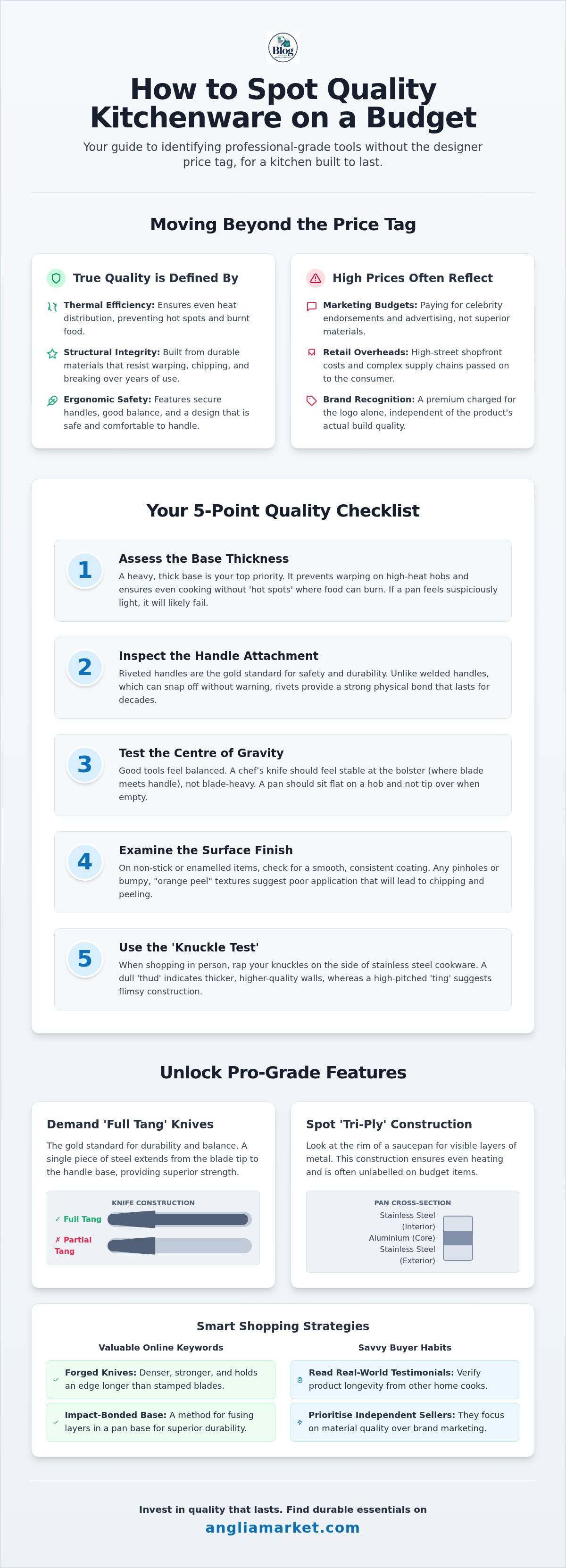
For cutlery, Full Tang construction is the gold standard for knife durability and balance, featuring a single piece of steel that extends from the blade tip to the base of the handle. You can find these essentials from independent sellers in the kitchen and dining section of trusted marketplaces like Anglia Market.
Identifying Durable Materials Without the Designer Label
Spotting "Tri-Ply" stainless steel is a simple visual test. Look at the rim of the saucepan for visible layers of metal sandwiched together, typically aluminium between steel, which ensures even heating without hot spots. This construction is often unlabelled on budget items but provides the same performance as premium brands. Raw cast iron is the ultimate "buy it for life" investment for any UK kitchen because it costs far less than enamelled alternatives and lasts for generations.
If you need high-heat performance for searing or stir-frying without the bulk, carbon steel is the ideal choice. It's significantly lighter than iron and develops a natural non-stick patina over time. Learning how to spot quality kitchenware on a budget means looking past the polished packaging to the raw materials and construction methods that actually impact your cooking results.
The 5-Point Quality Checklist for Budget Kitchenware Shopping
Inspecting construction is the most reliable way to identify value. Understanding how to spot quality kitchenware on a budget requires a shift in focus from the label to the build. A heavy base is your first priority. It prevents "hot spots" where food burns unevenly and ensures the pan won't warp on high-heat induction or electric hobs. If a pan feels suspiciously light, it's likely to fail under stress.
Check the handle attachment next. Riveted handles are the gold standard for safety and durability. Unlike welded handles, which can snap off without warning, rivets provide a physical bond that lasts for decades. You should also test the centre of gravity. A chef’s knife should feel balanced at the bolster, not blade-heavy. For pans, ensure they don't tip when empty. Finally, look at the surface finish. Any pinholes or "orange peel" textures in enamel or non-stick coatings suggest poor application that will lead to early peeling.
Essential 'In-Store' and Online Description Tests
When browsing online, certain keywords act as quality markers. Look for "forged" knives instead of "stamped" ones, and "impact-bonded" bases for saucepans. These manufacturing methods result in much tougher products. If you're shopping in person, use the "knuckle test" to check stainless steel thickness. A dull thud when you rap your knuckles against the side indicates thicker, higher-quality walls. Learning how to spot quality kitchenware on a budget becomes easier when you shop through vetted independent sellers in the Anglia Market Kitchen and Dining category. This approach ensures you're investing in tools that perform like professional gear without the high-street markup.
Building Your Professional Kitchen via Trusted UK Marketplaces
Supporting independent UK businesses on platforms like Anglia Market is a smart move for any savvy buyer. These specialist vendors prioritise product quality over expensive brand fluff. Unlike global big-box retailers, local SMEs often focus on specific categories like kitchen and dining. They offer high-spec items without the massive corporate markup. This is a core secret of how to spot quality kitchenware on a budget whilst ensuring your money supports regional commerce.
Always use testimonials to verify real-world durability before you click purchase. Real feedback from UK home cooks highlights whether a budget pan warps or stays flat over time. Avoid the temptation of "complete" 15-piece sets. These usually include redundant tools you'll never use. Instead, build your collection piece by piece. The Anglia Market Sale section is a primary source for high-spec clearance items that fit your professional-grade requirements.
Smart Maintenance to Make Budget Tools Last a Lifetime
Proper maintenance is what truly makes budget tools last. The "hand-wash only" rule is non-negotiable for your essentials. Dishwashers are the number one enemy of budget-friendly carbon steel and knives. Harsh chemicals and high heat dull sharp edges and strip away protective seasoning. Basic sharpening techniques make a £20 budget chef's knife perform like a £200 Japanese blade. Similarly, re-seasoning an affordable cast iron skillet with a thin layer of oil creates a natural non-stick surface. Knowing how to spot quality kitchenware on a budget is the first step. Proper care ensures those tools stay in your kitchen for a lifetime.
Equip Your Kitchen for a Lifetime of Cooking
Building a professional-grade kitchen doesn't require a designer budget. By focusing on structural integrity and material quality, you can secure tools that outperform expensive high-street alternatives. Remember to check for heavy bases and riveted handles to ensure your investment lasts. Mastering how to spot quality kitchenware on a budget allows you to spend your money where it counts: on the raw materials and craftsmanship that actually improve your cooking results.
Ready to upgrade your culinary arsenal? You can browse quality kitchenware from independent UK sellers at Anglia Market today. We support local businesses and provide a secure checkout with dependable home delivery across the UK. There's a wide variety of Home & Garden essentials waiting for you. Start building your "buy it for life" collection today and enjoy the confidence that comes with using truly reliable tools.
Frequently Asked Questions
Is it better to buy a kitchenware set or individual pieces on a budget?
It's almost always better to buy individual pieces rather than complete sets. Sets often include redundant tools like small milk pans or low-quality utensils that inflate the price without adding value. By choosing individual items, you can ensure every piece meets your standards for weight and material. This targeted approach is a core tactic in how to spot quality kitchenware on a budget.
How can I tell if a pan is induction-compatible without a label?
You can check for induction compatibility using a simple magnet. If a standard kitchen magnet sticks firmly to the underside of the pan, it will work on an induction hob. This indicates the presence of ferrous metal required for the magnetic circuit. Pure aluminium or copper pans won't work unless the manufacturer has added a magnetic stainless steel plate to the base.
Why should I avoid glass cutting boards even if they are cheap?
Avoid glass cutting boards because they ruin knife edges. Glass is significantly harder than the steel used in kitchen knives; this causes the blade to dull, roll, or chip almost immediately. They also lack the grip found in wood or plastic, making them a slipping hazard whilst chopping. Protecting your cutlery is vital for long-term savings in any kitchen.
What is the most important piece of kitchenware to invest in first?
A versatile chef's knife is the most important piece to invest in first. You'll use it for almost every meal, so prioritising a balanced, full-tang blade provides the biggest improvement to your cooking experience. One excellent knife is far more useful than a cheap set of five. This strategy demonstrates how to spot quality kitchenware on a budget by focusing on high-utility items.

Here to help — ask anything
For questions about this disclaimer or the site, contact us via the website’s Contact page.
No posts found
Write a review