The Best Online Selling Platforms in the UK: A 2026 Guide

For small and medium-sized businesses in the UK, choosing where to sell your products online can feel overwhelming. With so many platforms available, each with different fees, features, and audiences, how do you know which one is right for you? This guide breaks down the top online selling platforms in the UK to help you compare your options and find the perfect home for your business.
Choosing Your Platform: A Quick Comparison
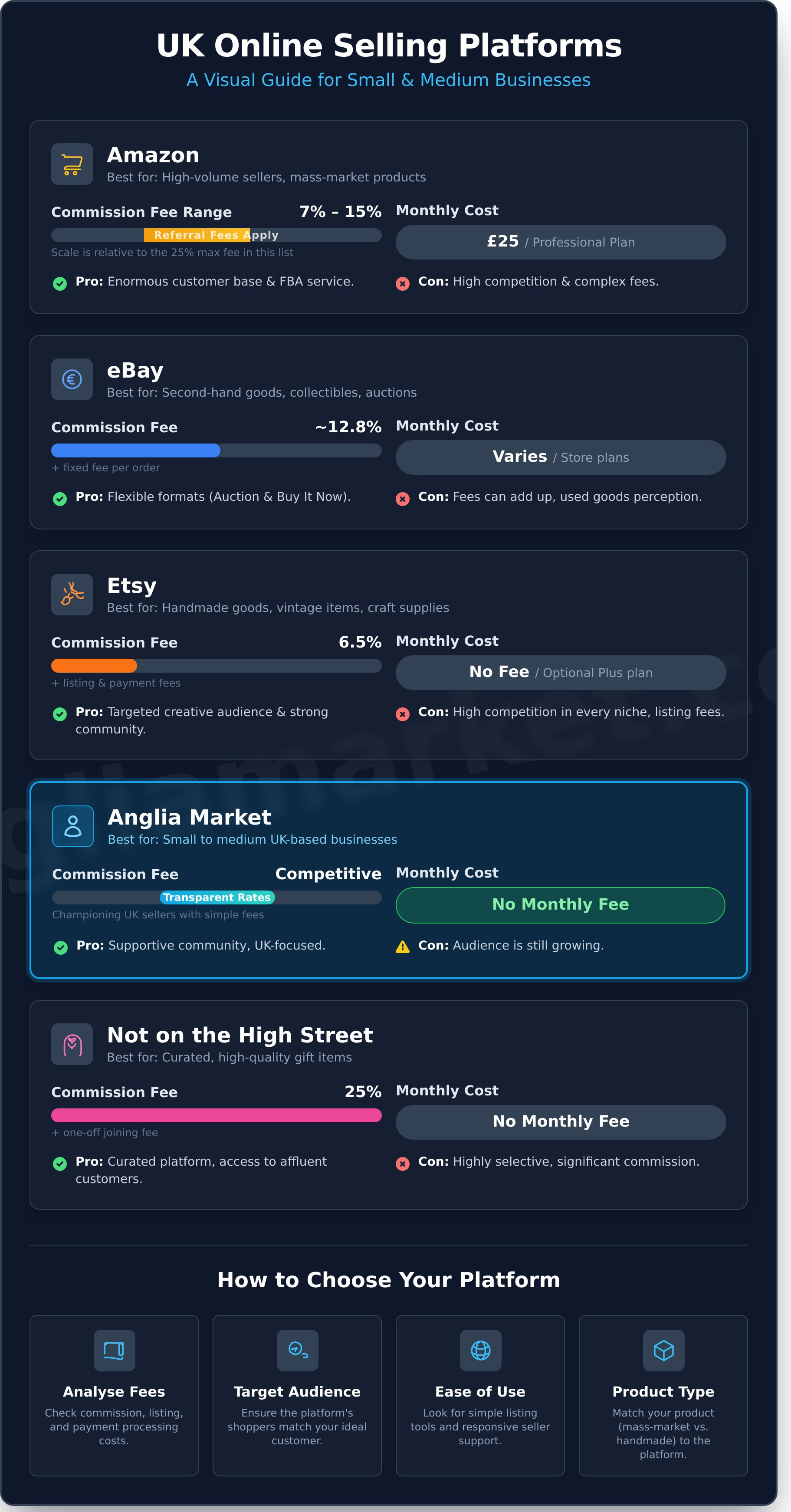
To get started, here is a quick overview of some of the most popular online selling platforms for UK businesses. This table gives you an at-a-glance look at their key differences to help you narrow down your choices.
| Platform | Best For | Key Fees (Commission %) | Monthly Cost |
|---|---|---|---|
| Amazon | High-volume sellers with mass-market products | 7-15% + referral fees | £25 (Professional Plan) |
| eBay | Second-hand goods, collectibles, and auctions | ~12.8% + fixed fee | Varies (Store subscriptions available) |
| Etsy | Handmade goods, vintage items, and craft supplies | 6.5% + listing & payment fees | No monthly fee (optional Plus plan) |
| Anglia Market | Small to medium UK-based businesses | Transparent, competitive rates | No monthly fee |
| Not on the High Street | Curated, high-quality gift items | 25% + joining fee | No monthly fee |
The Best All-Rounder Online Marketplaces
These platforms are the giants of e-commerce, offering access to millions of customers across a vast range of product categories. While they provide incredible reach, they also come with significant competition.
Amazon UK: The E-commerce Giant
Amazon is the largest online retailer in the world, making it an obvious choice for sellers wanting maximum visibility. It's best suited for businesses with mass-market products that can handle high-volume sales. The main advantage is its enormous customer base who trust the platform implicitly. Furthermore, its Fulfilment by Amazon (FBA) service can handle storage, packing, and shipping for you. However, the platform is incredibly competitive, the fee structure can be complex, and sellers must adhere to very strict rules.
eBay UK: The Original Auction Site
eBay started as an auction site but has evolved into a massive marketplace where businesses can sell new and used items. It’s still the go-to platform for second-hand goods, unique collectibles, and refurbished electronics. The flexibility of its selling formats—offering both 'Buy It Now' and auction-style listings—is a major plus. On the downside, its fees can add up quickly, and some buyers still perceive it primarily as a marketplace for used items, which might not suit every brand.
Anglia Market: The UK's Small Business Champion
Anglia Market is a fast-growing platform designed specifically to support UK-based small and medium-sized businesses. It offers a refreshing alternative to the global giants, focusing on creating a community for independent vendors. The key benefits include a simpler, more transparent fee structure and a commitment to championing local sellers. While its audience is still growing compared to Amazon or eBay, it offers a fantastic opportunity to get in on the ground floor of a supportive, UK-focused marketplace. Join a marketplace built for UK sellers. Start selling on Anglia Market.
Top Platforms for Niche and Creative Products
If your products are handmade, vintage, or fall into a creative niche, a specialised platform can connect you with a more targeted and passionate audience.
Etsy: The Home of Handmade and Vintage
Etsy is the undisputed leader for crafters, artists, and sellers of unique goods. Its global audience comes to the site specifically looking for handmade, personalised, and vintage items that they can't find anywhere else. The platform has a strong sense of community and provides tools to help creative entrepreneurs thrive. The main drawback is the high level of competition within every niche, and you have to pay a small fee to list each item, regardless of whether it sells.
Not on the High Street: The Curated Gift Marketplace
Not on the High Street (NOTHS) is a highly curated marketplace focused on premium, original, and often personalised gifts. Being accepted as a seller gives your brand a seal of approval and access to an affluent customer base looking for high-quality products. However, the platform is very selective, with a strict curation process. It also charges a one-off joining fee and takes a significant commission on sales, making it more suitable for established brands with healthy profit margins.
How to Choose the Right Selling Platform for You
Making the right choice is a crucial business decision that depends entirely on your products, goals, and resources. Before you commit, consider these key factors.
Analyse the Fees and Pricing
Look beyond the headline commission rate. You need to account for all potential costs, including listing fees, monthly subscription fees, and payment processing charges. Calculate how these fees will impact your profit margin on each sale to ensure your business model is sustainable. Always read the fine print to check for hidden costs or required add-ons.
Understand the Target Audience
Ask yourself: who shops on this platform? Do they align with your ideal customer? A marketplace with millions of users is no good if none of them are looking for what you sell. Niche platforms may have less traffic, but that traffic is often more targeted and more likely to convert into a sale.
Consider Ease of Use and Seller Support
The platform should make your life easier, not harder. Evaluate how simple it is to list products, manage inventory, and track your orders. Crucially, find out what kind of support the platform offers its sellers. When something goes wrong, having access to responsive and helpful support can be invaluable.
Evaluate Your Product Type
Your product is the most important factor. Is it a mass-produced item that can compete on price, or is it a unique, handmade craft? Some platforms, like Etsy, are built for creative goods, while others, like Amazon, are better for standardised products. Make sure you choose a platform where your product category is already popular and well-represented.
Frequently Asked Questions (FAQs)
What is the cheapest online platform to sell on in the UK?
Platforms with no monthly fees, like Anglia Market or the basic plans on Etsy and eBay, are often the cheapest to get started on. However, you should always calculate the total cost, including commission and transaction fees, to see which is most cost-effective for your specific products.
Do I need to register as a business to sell online?
If you are buying or making goods with the intention of selling them for a profit, you are legally required to register as a business with HMRC, typically as a sole trader or limited company.
Can I sell on multiple platforms at the same time?
Yes, many businesses use a multi-channel strategy to sell across several platforms. This can increase your reach but requires good inventory management to avoid selling an item that is out of stock.
Which UK selling site is best for second-hand items?
eBay is traditionally the most popular and largest platform for selling second-hand items in the UK, from clothing to electronics. Facebook Marketplace is also a strong, fee-free option for local sales.
How do I handle shipping and returns when selling online?
Most platforms require you to set your own shipping policies and prices. You will be responsible for packing and sending orders. It's essential to have a clear returns policy that complies with UK consumer rights law.
Choosing the right platform is the first step on your e-commerce journey. By focusing on a site that aligns with your products, budget, and business values, you can set yourself up for success. If you're looking for a UK-based marketplace dedicated to supporting small businesses with simple, transparent fees, why not join a growing community of independent vendors? Ready to reach UK customers? Start selling with Anglia Market today!
No posts found
Write a review