Outdoor storage boxes in the UK for sizes, security and damp control
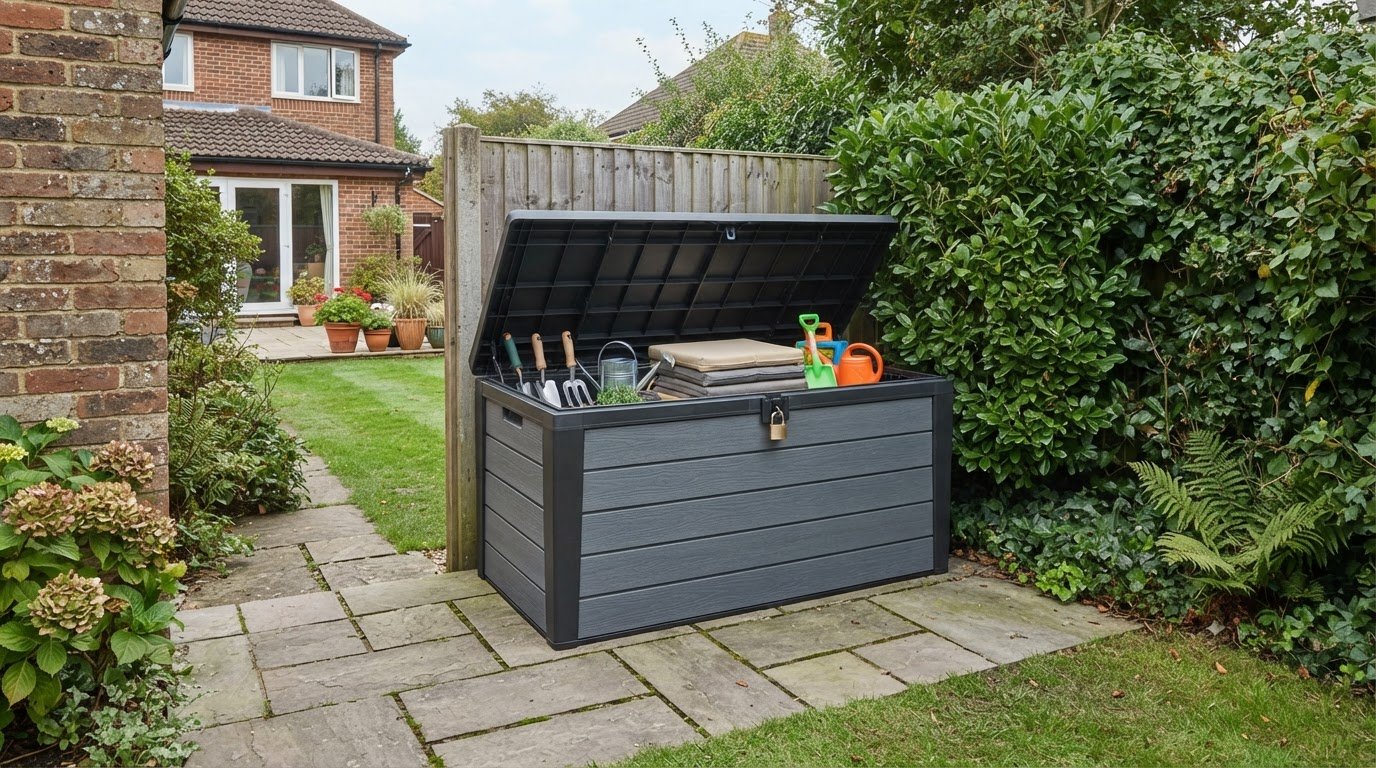
A padlock alone won’t make a garden box secure. To help protect an outdoor storage box in the UK, choose a model with lockable fittings, use a suitable weather-resistant lock and place it where it is difficult to move or access unseen. Keep valuable tools out of sight, and don’t rely on a plastic box instead of a more secure outbuilding.
Plan for damp and choose a capacity that suits what you’ll store, from garden tools to cushions and toys. This guide covers practical ways to secure a plastic box, reduce moisture and select a useful size. It also explains what to compare when choosing a box for your garden and everyday needs.
Key Takeaways
- Look beyond a lid when judging security: the box’s lockable fittings and where you position it both matter.
- Reduce damp by keeping stored items dry before packing and allowing air to circulate inside the box.
- Match capacity to what you’ll store, then compare the box’s dimensions with the space available in your garden.
- For winter use, consider the box’s material, location and contents; Anglia Market helps you browse physical goods from independent sellers.
How do I stop damp in garden storage boxes?
Dry tools, cushions and toys fully before storing them. Leave space around items for airflow, and avoid pressing fabric against the box walls. Place the box on a firm, level surface rather than wet soil, and open it on dry days to let trapped moisture escape. These steps can help reduce condensation and musty smells.
For a large garden box in the UK, plan its size and position carefully. Before installation, compare its height and footprint with your local council’s planning guidance, especially if it will sit near a boundary or affect access. Placement may depend on factors beyond the box’s colour or material.
See how the Keter Store It Out Max 1200L is assembled in this video:
Material affects maintenance. Plastic or resin does not absorb moisture like untreated timber, while metal can rust if its protective finish is damaged. Timber may need more regular care to protect its surface. Whichever material you choose, clear leaves from the base and check for blocked drainage or gaps where rain could enter.
Colour can help a box blend into your garden. Green or brown may sit well among plants and fences, while grey can suit a contemporary patio. Choose a shade that works with nearby furniture, but prioritise placement and ventilation over appearance. A simply finished storage cabinet can also reduce visual clutter beside a shed or wall.
Outdoor storage box capacities and sizes
Choose capacity based on what you plan to store, then compare the box’s external dimensions with your available space. A litre figure describes volume, not the shape of the storage area. A long-handled spade may need more floor length than cushions, even if both fit within the same stated capacity.
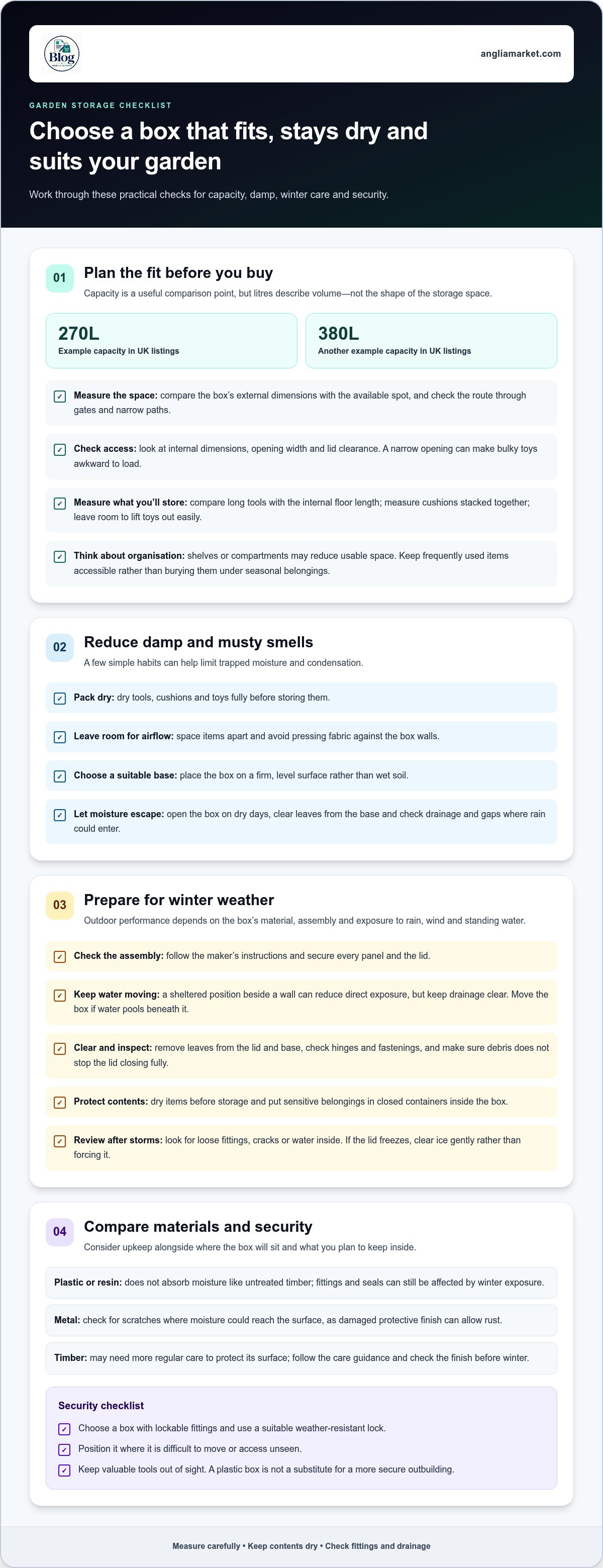
UK listings include outdoor boxes with capacities such as 270L and 380L. Use those figures as comparison points, not as a guarantee that a particular set of belongings will fit. Check the product’s internal dimensions, opening width and lid clearance. A narrow opening can make bulky toys awkward to load, while a deep box may be harder to organise.
Group items by type and measure the largest pieces before choosing. Then consider how often you’ll need each item. A compact cabinet may suit a few hand tools, while cushions and children’s toys may need more room. Keep frequently used items accessible instead of burying them beneath seasonal belongings.
- Garden tools: compare the longest tool with the internal floor length and lid opening.
- Cushions: measure them stacked together, rather than estimating from one cushion.
- Toys: allow room to lift items out without unpacking the whole box.
Measure the route to the chosen spot, including gates and narrow paths. The box must fit through before it can sit beside a fence or patio. If it has shelves or compartments, check whether they reduce usable space. Measuring carefully helps avoid choosing a box that holds less than expected or blocks garden access.
Can an outdoor storage box be left outside in winter in the UK?
A box designed for outdoor use can stay outside through a UK winter, but its condition depends on its material, assembly and exposure to rain, wind and standing water. Follow the maker’s instructions, secure every panel and the lid, and place the box on a firm, level surface. A sheltered position beside a wall can reduce direct exposure, but keep drainage clear.
Prepare the box and its contents before cold, wet weather arrives. Remove leaves from the lid and base, check hinges and fastenings, and clear away anything that could hold water. Dry tools and cushions before storing them. Damp fabric packed tightly can develop a musty smell, even when the box’s outer shell sheds rain.
- Check the base: move the box if water pools beneath it after rain.
- Inspect the lid: remove debris that stops it closing fully.
- Protect contents: place sensitive items in closed containers inside the box.
- Review after storms: look for loose fittings, cracks or water inside.
Plastic and resin boxes do not need the same surface treatment as timber, but winter exposure can still affect their fittings and seals. Check metal boxes for scratches where moisture could reach the surface. Don’t force a frozen lid: clear ice gently and let the catch move freely. For timber, follow the care guidance and check the finish before winter.
Choose a location that stays accessible for checks, rather than wedging the box behind stored clutter. Browse home and garden storage options to compare suitable choices for your outdoor space.
Anglia Market: Online Marketplace Platform
Anglia Market’s Online Marketplace Platform brings together physical goods from independent vendors, including home and garden supplies. Once you’ve settled on the capacity, material and placement that suit your garden, browse relevant listings and compare the stated dimensions and features of each item.
Use a checklist to narrow your options: confirm the box fits its intended spot, suits the items you plan to store and has the features you need. Product details can help you compare options confidently. Anglia Market supports small and medium-sized businesses by giving vendors a platform to reach a broader customer base.
Visit Anglia Market to explore home and garden goods.
Choose storage that fits your next season
Before choosing, decide what you need the box to do day to day: keep seasonal items out of sight, make children’s toys easy to reach, or free up space beside the back door. Your chosen outdoor storage box in the UK should suit your garden routine, not just its appearance. Think, too, about how your needs change through the year. A simple plan for rotating cushions, toys and tools can make stored items easier to find and keep your outdoor space organised. Compare product details with your own priorities, then choose the option that best fits how you’ll use it. If you’d like to explore storage-related goods through Anglia Market, contact Anglia Market about storage. A considered choice can make everyday garden storage feel much simpler.
Frequently Asked Questions
How can I keep my plastic garden storage box secure?
If the box has lockable fittings, use a compatible padlock and keep the key somewhere separate. Place the box where neighbours can see the area, rather than behind a tall fence or dense planting. For a box on a windy or exposed patio, follow the maker’s instructions for securing it. Avoid drilling holes that could weaken its structure.
Which size of outdoor storage box is best for me?
The right size meets your regular storage needs without obstructing the garden. When choosing an outdoor storage box in the UK, plan around what you’ll keep inside throughout the year, not just the items you have now. Consider whether you need everything within reach or can store seasonal belongings elsewhere.
What size outdoor storage box do I need for garden cushions, tools or toys?
Match the internal space to the shape of your belongings. A stack of square cushions uses space differently from a long rake, and small toys can leave gaps between larger items. Measure a folded parasol separately from a cushion stack, then check that the opening can accommodate both. Keep sharp tool edges away from soft fabrics.
Best materials for a weatherproof outdoor storage box: resin, wood or metal?
There is no single best material for every garden. Choose according to the look and maintenance you prefer: resin can suit a low-maintenance space, timber may complement a wooden fence or shed, and metal offers a different finish for a modern patio. Consider the box’s position and how it will look beside your existing garden furniture.
Are outdoor storage boxes waterproof and UV-resistant?
Not every outdoor box is fully waterproof or UV-resistant. Protection depends on the specific product, its construction and its stated materials. Check the product description for weather-protection and UV-resistance details. A lid that sheds rain does not necessarily make a box watertight, so keep moisture-sensitive belongings in suitable inner bags or containers.

Here to help — ask anything
For questions about this disclaimer or the site, contact us via the website’s Contact page.
No posts found
Write a review