Choosing a Durable Garden Shed: UK Buyer’s Guide 2026

Most garden sheds aren't built to survive a decade of relentless rain and gale-force winds. Rotting timber, leaky roofs, and leaning structures; you've likely seen the results after a single British winter. It's frustrating to invest your hard-earned money only to watch your storage space deteriorate. This guide shows you exactly how to choose a durable garden shed by identifying the structural hallmarks of quality and the materials that actually stand up to the elements.
We'll break down the differences between shiplap and overlap cladding. You'll learn why the base is your most important decision. We'll also help you find a secure, low-maintenance solution from trusted UK vendors that adds genuine value to your property. Discover how to spot high-quality designs that keep your tools dry and secure for years to come.
Key Takeaways
- Identify the materials that won't fail in the UK climate, from pressure-treated timber to galvanised steel and high-density plastic.
- Compare cladding styles like Shiplap and Tongue & Groove to ensure your new structure stays watertight and secure against the elements.
- Discover the professional secrets of how to choose a durable garden shed that remains sturdy through every British season.
- Learn how to source high-quality structures from quality-checked UK vendors by using verified customer feedback on the Anglia Market platform.
Understanding Shed Materials: Which One Survives the British Weather?
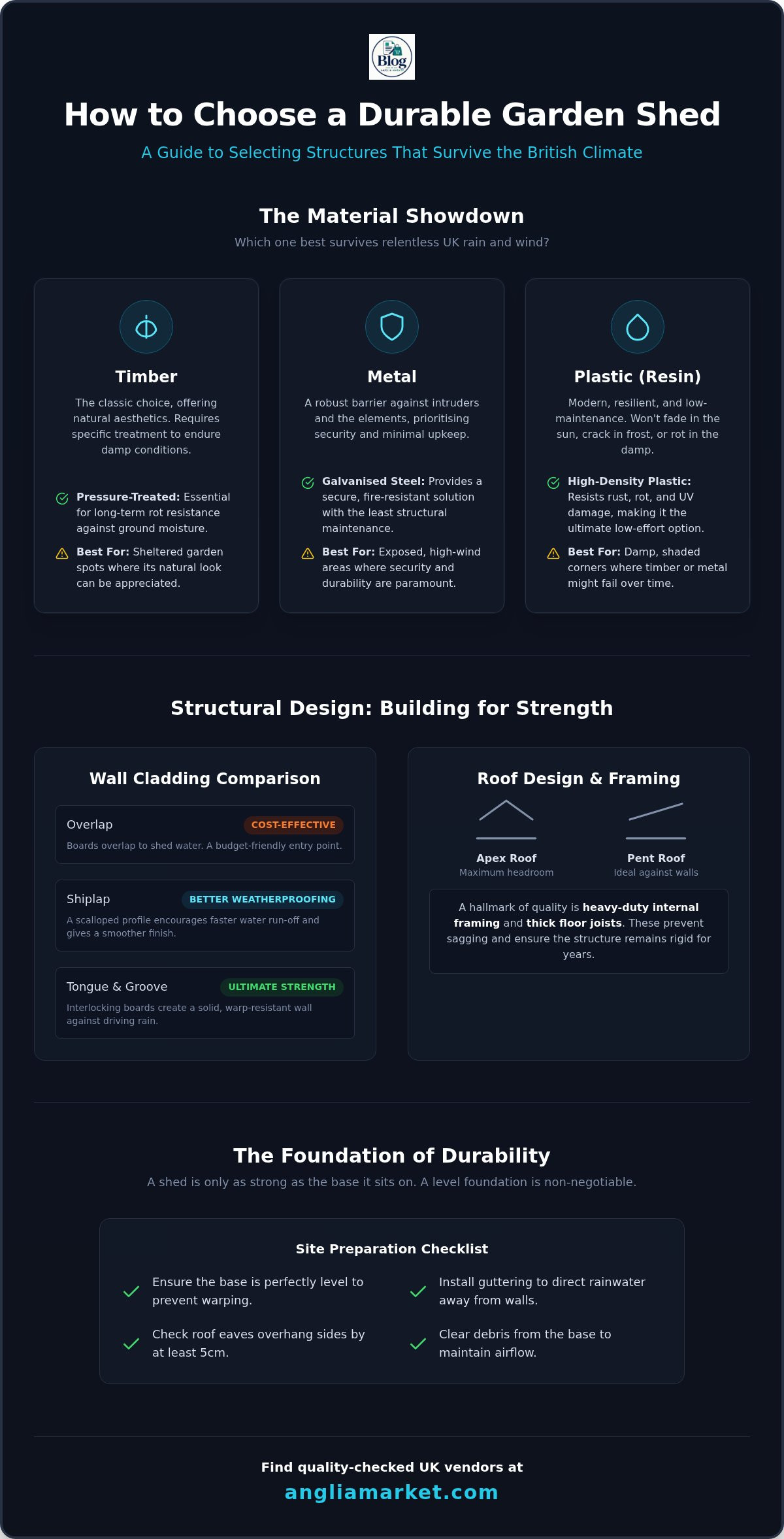
Selecting the right base material is the first step in learning how to choose a durable garden shed. Timber remains a classic choice for its aesthetic appeal, but it requires specific treatment to survive damp UK winters. Pressure-treated timber is a non-negotiable requirement. This process forces preservatives deep into the wood fibres, preventing rot for much longer than dip-treated alternatives. Without this protection, softwood structures can fail within just a few years of exposure to ground moisture.
For those prioritising security, galvanised steel offers a robust barrier against both intruders and the elements. It requires the least structural upkeep, though you must ensure it has adequate ventilation to prevent condensation. Modern high-density plastic or resin sheds are also resilient. They don't fade in the sun or crack in the frost. These materials are frequently highlighted in discussions regarding Shed construction and materials due to their low-maintenance nature.
To better understand these material differences, watch this helpful video:
Comparing Timber, Metal, and Plastic for Maximum Longevity
Material choice should depend on your specific garden environment and local weather conditions.
- Timber: Excellent for sheltered spots; pressure-treatment provides long-term rot resistance.
- Metal: Best for high-wind areas; provides a secure, fire-resistant storage solution with minimal upkeep.
- Plastic: Ideal for damp, shaded corners; won't rust or succumb to wet rot from standing water.
Shift your focus to a cost per year mindset. A budget overlap wood shed might seem like a bargain today, but it often requires annual painting and roof repairs. When researching how to choose a durable garden shed, you'll find that premium metal or resin models from the Home & Garden section usually offer a much longer service life. High-quality materials ensure your storage space stays dry and secure without the constant need for expensive treatments.
Structural Design and Cladding: Building for Strength
Understanding cladding is vital when learning how to choose a durable garden shed. Overlap cladding is a cost-effective entry point; it relies on boards simply overlapping to shed water. Shiplap features a scalloped profile that encourages faster run-off and offers a smoother finish. For the ultimate strength, tongue and groove boards interlock tightly. This creates a solid, weather-resistant wall that resists warping and provides a secure barrier against driving rain. You can browse these various durable designs to find the best fit for your space.
Roof design also impacts longevity. Apex roofs offer a classic high central ridge, providing maximum internal head room and efficient drainage to both sides. Pent roofs have a single slope, making them ideal for placement against walls or fences. Ensure your choice complies with UK planning permission for garden sheds, especially regarding height limits near boundaries. Look for heavy-duty framing and thick floor joists. These internal supports prevent the roof from sagging and the floor from bouncing under heavy equipment. Sturdy framing is a hallmark of quality when deciding how to choose a durable garden shed for long-term use.
The Importance of a Solid Base and Effective Drainage
A shed is only as strong as its foundation. A level concrete or paved base prevents the entire structure from twisting or warping over time. It's essential to maintain air circulation beneath the floorboards to stop rising damp from rotting the timber. Use this quick checklist to ensure your site is ready:
- Ensure the base is perfectly level to avoid door misalignment.
- Install guttering to direct rainwater away from the wooden walls.
- Check that roof eaves overhang the sides by at least 5cm.
- Clear leaves and debris from the base to maintain consistent airflow.
Choosing the Right Shed for Your Home and Garden
Finding a reliable supplier is just as important as selecting the right materials. When researching how to choose a durable garden shed, look for platforms that vet their sellers for quality. Anglia Market connects you with independent UK vendors, making it easy to find specialist structures. Always check customer testimonials to verify a seller's reliability and delivery performance before you commit.
Shopping for garden furniture and storage in one trusted UK marketplace ensures your outdoor aesthetic remains cohesive. You can often find significant value on high-specification models in the Sale and Promotions sections. Before you buy, ensure your chosen model aligns with UK planning permission rules for sheds. This prevents legal issues regarding height or placement later on.
Simple Maintenance Tips to Guarantee a Decade of Use
Even the most robust structure requires basic care to withstand the British elements. An annual maintenance routine is the best way to protect your investment. Focus on these key areas to identify early signs of wear before they become expensive structural problems:
- Apply a high-quality wood treatment to timber sheds every 12 months.
- Lubricate metal hinges and door locks to prevent seizing or rust.
- Check seals around windows and doors after harsh winter months to ensure they stay watertight.
- Inspect the roof felt or shingles for tears or lifting after high winds.
Consistency is key. Small repairs, such as replacing a single roof shingle or re-tightening a hinge, can prevent total structural failure. By following these steps, you'll ensure your shed remains a dry, secure, and valuable asset for years.
Invest in a Lasting Garden Structure
Finding the perfect outdoor building doesn't have to be a gamble. By mastering how to choose a durable garden shed, you've learned that success lies in the details. Focus on pressure-treated timber, interlocking cladding, and a solid foundation to protect your tools from the unpredictable British weather. These structural choices ensure your investment adds value to your property whilst remaining a dry, secure space for years. Consistent maintenance keeps these structures in peak condition through every season.
Ready to upgrade your garden storage? You can shop a wide range of durable garden sheds on Anglia Market today. As a trusted UK marketplace, we support independent sellers and offer a comprehensive Home & Garden category for all your outdoor needs. Enjoy a secure checkout and reliable UK-focused delivery on every order. Start building your ideal garden storage solution now.
Frequently Asked Questions
Do I need planning permission for a garden shed in the UK?
In many cases, garden sheds fall under permitted development rights and don't require planning permission. Rules often state a shed within 2 metres of a boundary cannot exceed 2.5 metres in height. A Lawful Development Certificate can formally confirm compliance for a fee of £103 in 2026. Always check with your local planning authority for specific advice before starting any work.
How do I stop my wooden shed from rotting at the base?
To prevent rot, you must stop moisture from sitting against the timber. Ensure your shed is installed on a level concrete or paved base rather than directly on the ground. Using pressure-treated timber is essential for long-term durability. Maintaining clear air circulation beneath the floorboards helps evaporate rising damp, which is a key factor in how to choose a durable garden shed.
What is the most durable type of garden shed for wet climates?
Galvanised steel and high-density plastic are the most resilient choices for the wet British climate. Unlike wood, these materials won't rot or require annual staining to remain watertight. Metal sheds offer superior security and fire resistance, whilst modern resin models won't fade or crack in frost. Both options provide a low-maintenance solution that survives relentless rainfall without structural degradation.
Can I put a garden shed directly onto grass or soil?
You shouldn't place a shed directly onto grass or soil as it will quickly sink and warp. Ground moisture causes timber to rot rapidly and leads to structural instability. A solid foundation, such as a concrete pad or paving slabs, is necessary to distribute weight evenly. This setup is a vital part of learning how to choose a durable garden shed that stays level.

Here to help — ask anything
For questions about this disclaimer or the site, contact us via the website’s Contact page.
No posts found
Write a review