Kids’ Ride-On Cars: 2026 UK Safety & Best Buy Guide
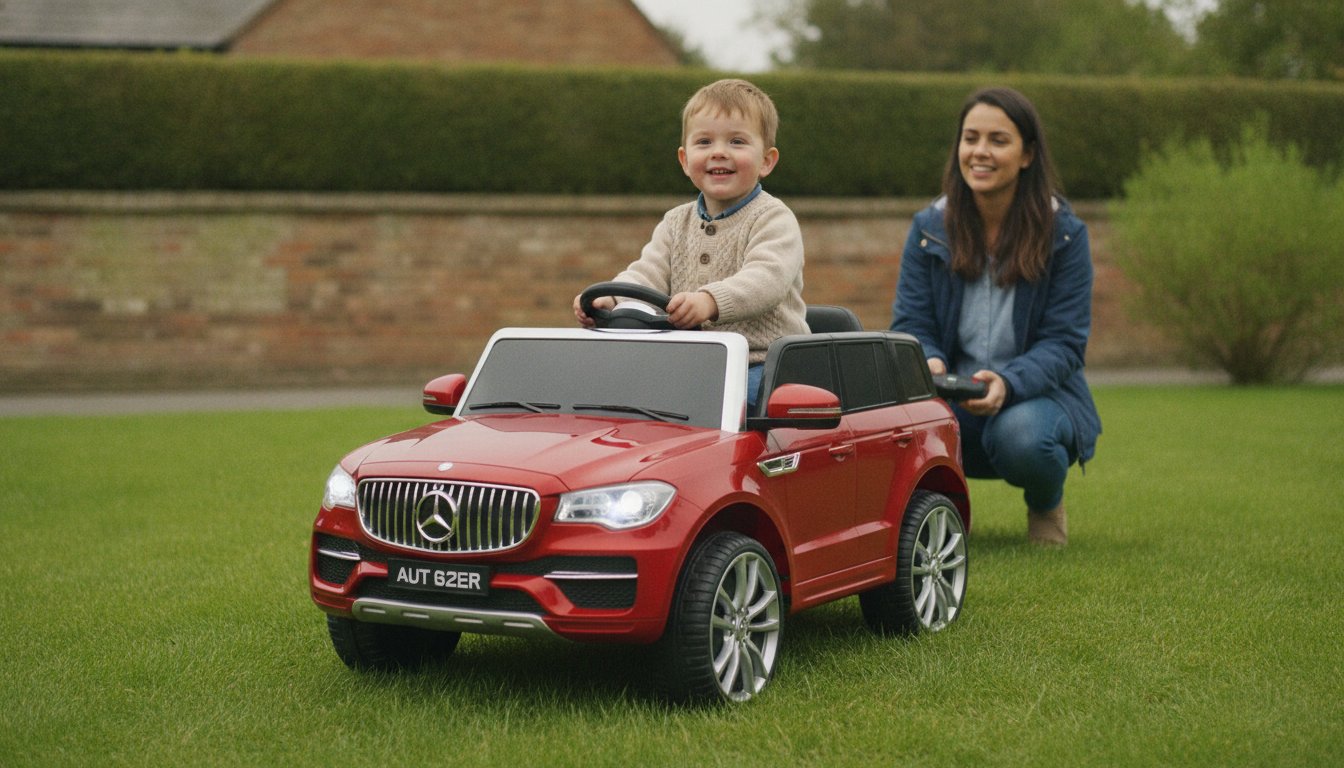
Choosing the wrong motor power for your garden terrain isn't just a performance issue; it's the most common reason for motor burnout and safety risks in garden play. Most parents want that "wow" factor for a birthday or Christmas, but the technical jargon surrounding 12V and 24V batteries often leads to more confusion than confidence. This Kids’ Ride‑On Cars: Safety & Best Buys guide simplifies the process, helping you select a durable electric vehicle that matches your child's age and your specific garden surface.
You likely worry about the car being too fast to control or whether it will simply stall on the grass. We'll explore essential safety features like parental remote controls, explain how to maximise battery life, and show you how to source reliable replacement parts from independent UK sellers who prioritise quality whilst ensuring a safe, thrill-providing experience for your little driver.
Key Takeaways
- Learn why 2.4G Bluetooth remotes and soft-start technology are essential safety overrides for protecting younger drivers from sudden jolts.
- Discover how to match battery voltage to your garden terrain to prevent motor strain whilst ensuring your child has enough power for grass and hills.
- Follow our Kids’ Ride‑On Cars: Safety & Best Buys advice to understand the benefits of sourcing toys from independent UK sellers for better long-term reliability.
- Find out how to spot premium electric vehicle deals and navigate marketplace sale sections to get the best value for your budget.
Essential Safety Features for Modern Kids' Ride-On Cars
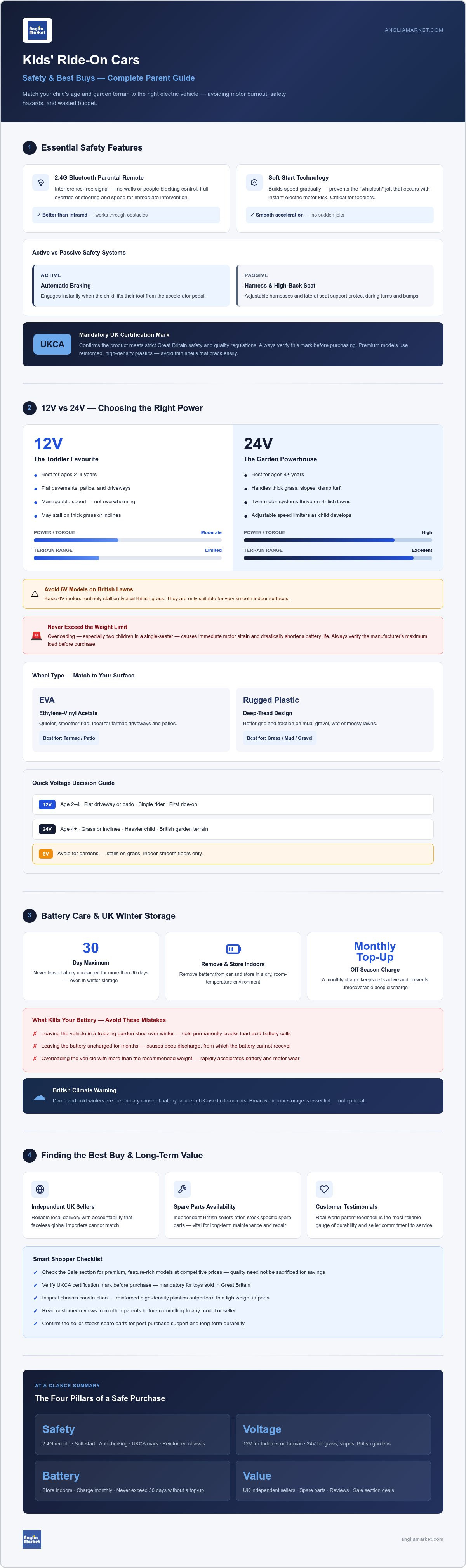
Safety is the top priority for parents exploring Kids’ Ride‑On Cars: Safety & Best Buys. Modern models include advanced tech to protect your child, starting with the 2.4G Bluetooth Parental Remote. Unlike older infrared versions that lose signal if a wall or person gets in the way, 2.4G technology provides a dedicated, interference-free connection. It allows you to take full control of steering and speed, acting as a vital safety override if your little driver heads towards a flowerbed or a kerb.
Soft-start technology is another critical feature for younger children. Without it, electric motors can "kick" during initial acceleration, causing a jerky motion that leads to the "whiplash" effect. This system ensures the car builds speed gradually and smoothly. Other essential safety elements include:
- Active Systems: Automatic braking that engages as soon as the child lifts their foot from the accelerator.
- Passive Systems: Adjustable harnesses and high-back seats that provide lateral support during turns.
Understanding UKCA Standards and Secure Construction
The UKCA mark is the mandatory certification for toys sold in Great Britain, confirming the product meets strict safety and quality regulations. When inspecting a car, check the chassis construction. Premium models use reinforced, high-density plastics that withstand impact, whereas lightweight imports often use thin shells that crack easily. For a wide range of safety-vetted options from independent UK sellers, browse the Toys & Games category. Choosing a well-built car ensures durability and peace of mind during garden play.
12V vs 24V: Choosing the Right Power for UK Gardens
Voltage is the engine room of any electric toy. Choosing between 12V and 24V depends entirely on where your child will drive. The 12V standard remains the favourite for toddlers. It provides enough power for flat pavements and patios without being overwhelming. If you're searching for Kids’ Ride‑On Cars: Safety & Best Buys for a three-year-old on a driveway, 12V is usually the sweet spot for manageable speed.
When your garden involves thick grass or slight inclines, you'll need more "grunt". This is where 24V models shine. They handle the resistance of uneven turf that would otherwise stall a smaller motor. Don't ignore the weight limits. Overloading a car, especially by letting two children squeeze into a single-seater, causes significant motor strain and quickly kills battery longevity. Always check the manufacturer's maximum load before purchasing.
Performance on UK Terrains: From Tarmac to Wet Grass
British lawns are rarely perfectly flat or dry. While basic 6V models often fail on typical British grass, 24V twin-motor systems thrive in these realistic conditions. They provide the necessary torque to push through damp patches or mossy areas. Consider the wheel type carefully:
- EVA Wheels: Made from Ethylene-vinyl acetate, these provide a quieter, smoother ride on tarmac.
- Rugged Plastic: Features deep treads for better traction on mud, gravel, or wet lawns.
Match the car's speed settings to your child's developmental stage. Many premium models feature adjustable limiters, allowing you to increase the pace as they gain coordination. To find a range of powerful options for every garden terrain, check out the latest Toys & Games inventory from our independent sellers.
Finding the Best Buy and Ensuring Long-Term Value
Buying from a UK marketplace like Anglia Market provides a level of accountability that faceless global importers simply can't match. You benefit from reliable local delivery and direct access to independent British sellers. These vendors often stock specific spare parts, which is vital for long-term maintenance. Supporting these smaller enterprises ensures you have a dedicated point of contact if you need technical support after your purchase.
Finding a bargain doesn't mean you have to settle for lower safety standards. Smart shoppers use the Sale section to find premium, feature-rich models at more competitive prices. Always verify the reputation of a seller by reading Customer Testimonials. Real-world feedback from other parents is the most effective way to gauge a car's durability and the vendor's commitment to service. This research is a cornerstone of mastering Kids’ Ride‑On Cars: Safety & Best Buys.
Battery Maintenance and Winter Storage in the UK Climate
British winters are damp and cold; these conditions are the primary cause of battery failure. To protect the lead-acid battery, remove it from the car and store it in a dry, room-temperature environment indoors. Never leave the vehicle in a freezing garden shed for months at a time, as the cold can permanently crack the battery cells.
Stick to a strict charging protocol to ensure the car starts in the spring. You should never leave a ride-on car uncharged for more than 30 days, even during the off-season. A monthly top-up charge keeps the cells active and prevents the battery from falling into a "deep discharge" state from which it cannot recover.
Before the summer season begins, organise a small service for the vehicle. Check for any loose wiring, tighten the wheel nuts, and wipe down the chassis with a damp cloth. A tiny amount of lubricant on the steering linkages will keep the movement smooth, ensuring the car stays road-ready for another year of garden adventures.
Upgrade Your Child’s Playtime with Confidence
Choosing the right electric vehicle means balancing excitement with essential safety features. You now know how to match 24V power to your garden terrain and why the UKCA mark is vital for peace of mind. By following this Kids’ Ride‑On Cars: Safety & Best Buys guide, you can avoid common pitfalls like motor strain and battery neglect. Buying from a dedicated marketplace ensures you receive better accountability and access to spare parts from local experts.
When you're ready to buy, shop the latest Kids' Ride-On Cars from trusted UK sellers. Every purchase supports independent UK SMEs whilst providing secure payments and reliable UK-wide delivery. It's the most convenient way to find a high-quality toy that lasts for seasons to come. Get ready to watch your little driver explore the garden in their new favourite car.
Frequently Asked Questions
Are electric ride-on cars safe for a 3-year-old?
Yes, electric ride-on cars are safe for three-year-olds if you choose models with a parental remote control and speed limiters. These features allow you to stop the vehicle instantly. Always ensure the car has a seatbelt and the UKCA safety mark. Constant supervision is essential, especially when your child is learning to steer and navigate garden obstacles.
How long does a 12V battery actually last on grass?
A 12V battery typically provides 30 to 45 minutes of continuous use on grass, which is significantly less than the 60 to 90 minutes achieved on flat tarmac. Thick or wet lawns increase motor resistance, draining the power faster. For the best Kids’ Ride‑On Cars: Safety & Best Buys experience in larger gardens, consider a 24V model to ensure longer play sessions.
Do I need to assemble the car myself when buying from a marketplace?
Most ride-on cars arrive partially assembled to protect the components during UK delivery. You'll typically need to attach the wheels, steering wheel, and seat, which usually takes around 30 to 60 minutes. Independent sellers on our marketplace include clear British English instructions. Always check the battery connections and charge the unit fully before the first use to protect the cells.
Can I get replacement chargers or batteries for these cars in the UK?
Yes, finding replacement chargers and batteries is straightforward when you buy through a UK-focused marketplace. Independent British vendors often stock compatible 12V and 24V lead-acid batteries and UK plug chargers. This accessibility is a key part of Kids’ Ride‑On Cars: Safety & Best Buys, ensuring your investment remains functional for years rather than becoming useless if a single component fails.

Here to help — ask anything
For questions about this disclaimer or the site, contact us via the website’s Contact page.
No posts found
Write a review