How to Compare Product Listings Like a Pro | Smart Online Shopping Guide UK
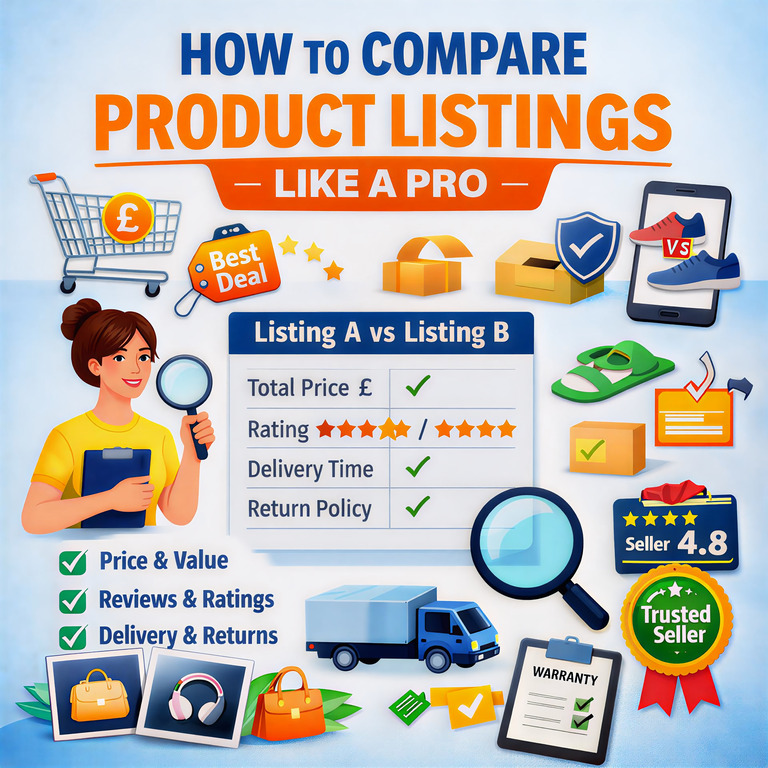
Online shopping has completely changed how we buy products. Whether you're browsing electronics, furniture, fashion, or home essentials, you’re likely comparing multiple listings before making a decision. But here’s the truth — most shoppers compare products the wrong way.
If you want to save money, avoid disappointment, and make confident buying decisions, you need to learn how to compare product listings like a pro.
This expert UK shopping guide will walk you step-by-step through evaluating price, seller credibility, product quality, delivery options, and hidden value — so you always make the smartest choice.
Why Comparing Product Listings Properly Matters
Not all listings are created equal. Two products may look identical in photos but differ in:
- Quality
- Warranty
- Seller reputation
- Shipping time
- Return policy
- Hidden fees
Professional shoppers know that price alone should never be the deciding factor.
When shopping on multi-seller marketplaces like Anglia Market, comparing listings carefully ensures:
- Better value for money
- Higher quality products
- Safer transactions
- Fewer returns and refunds
- A better overall shopping experience
Step 1: Compare the Full Price — Not Just the Headline Price
The first mistake many shoppers make is focusing only on the listed price.
What to check:
- Base price
- Delivery cost
- VAT inclusion
- Bulk discounts
- Promotional codes
- Bundle offers
Sometimes a slightly higher product price includes free shipping, making it cheaper overall than a lower-priced item with expensive delivery.
???? Pro Tip: Always calculate the total checkout cost before deciding.
Step 2: Analyse Product Descriptions Carefully
A professional shopper reads beyond the headline.
Look for:
- Product dimensions
- Material quality
- Technical specifications
- Compatibility details
- What’s included in the box
- Care instructions
If one listing has a detailed, transparent description while another is vague, the detailed one often signals a more reliable seller.
Poor descriptions can hide:
- Lower material quality
- Missing accessories
- Smaller dimensions than expected
Step 3: Compare Product Images Like an Expert
Images reveal more than you think.
Check for:
- Multiple angles
- Zoom capability
- Lifestyle vs plain background photos
- Close-ups of materials or stitching
- Size comparison images
Listings with only one low-quality image can be a red flag. High-quality photos often indicate a professional seller who takes their business seriously.
Step 4: Evaluate Seller Reputation
When shopping on an online marketplace, you’re often buying from independent sellers. This means reputation matters.
Check:
- Seller rating
- Customer reviews
- Number of sales
- Response rate (if available)
- Return history feedback
A 4.9 rating with 500 reviews is more reliable than a 5.0 rating with 3 reviews.
Professional buyers look for:
- Consistency in positive feedback
- Detailed reviews, not generic comments
- How sellers respond to complaints
Step 5: Read Reviews Strategically
Most shoppers either ignore reviews or only read the first one.
Instead:
- Sort by most recent
- Look at 3-star reviews (balanced feedback)
- Check for repeated complaints
- Identify real customer photos
If multiple customers mention:
- Late delivery
- Poor packaging
- Misleading size
- Faulty electronics
…that’s valuable information before you buy.
Step 6: Compare Delivery Speed and Flexibility
Delivery can make or break your experience.
Compare:
- Standard delivery time
- Express shipping options
- Dispatch time (how fast seller ships)
- Tracking availability
- Weekend delivery availability
If you need an item urgently, paying slightly more for faster shipping may be worth it.
Step 7: Check Return Policies Carefully
This is where smart shoppers protect themselves.
Look at:
- Return window (14 days? 30 days?)
- Who pays return postage?
- Is the item refundable or exchange-only?
- Restocking fees?
A flexible return policy reduces risk and increases buyer confidence.
Step 8: Compare Value — Not Just Price
Here’s where professionals think differently.
Instead of asking:
“Which is cheaper?”
Ask:
“Which offers the best value?”
Value includes:
- Durability
- Warranty length
- Brand reputation
- Customer support
- Included extras
Example: A £25 product lasting 5 years is better value than a £15 product that breaks in 6 months.
Step 9: Look for Certifications and Trust Signals
For certain categories, certifications matter:
- CE marking (electronics in the UK)
- Safety compliance
- Organic certification (food/beauty)
- Eco-friendly labels
Trust signals also include:
- Secure checkout
- Verified payment options
- Clear contact information
Step 10: Use Side-by-Side Comparison Method
Here’s a simple professional method:
Create a quick comparison checklist:
Feature | Listing A | Listing B |
Total Price | £ | £ |
Reviews | ★ | ★ |
Delivery Time | ||
Return Policy | ||
Warranty | ||
Materials |
This removes emotional decision-making and makes your choice logical.
Common Mistakes to Avoid When Comparing Listings
Even experienced shoppers can fall into traps.
❌ Choosing the cheapest option automatically ❌ Ignoring delivery fees ❌ Not checking seller reviews ❌ Skimming product descriptions ❌ Overlooking return policies ❌ Trusting only star ratings
How to Compare Listings Faster (Time-Saving Tips)
If you shop regularly, here’s how to speed up the process:
- Focus on top 3 listings only
- Eliminate anything under 4 stars
- Ignore listings with incomplete descriptions
- Prioritise sellers with multiple verified reviews
- Check total cost immediately
Within minutes, you can narrow down to the best option confidently.
Why This Matters More on Marketplaces
On multi-seller platforms like Anglia Market, different sellers may offer similar products — but their service, quality control, and delivery standards can vary.
Knowing how to compare listings properly ensures you:
- Support trustworthy independent sellers
- Avoid unreliable vendors
- Get better long-term value
- Shop with confidence
Final Thoughts: Shop Smarter, Not Harder
Learning how to compare product listings like a pro is one of the most valuable online shopping skills you can develop.
By focusing on:
- Total price
- Product details
- Reviews
- Seller credibility
- Delivery and returns
- Overall value
…you’ll consistently make better buying decisions.
Smart shopping isn’t about spending less — it’s about spending wisely.
No posts found
Write a review